
After more than a year in operation, the AllPrevent project is facing a decisive milestone in 2026 in its goal of anticipating serious complications in patients with chronic diseases, especially in the field of nephrology. Our initiative, in direct collaboration with the Príncipe de Asturias University Hospital, is already helping to improve the clinical monitoring of more than 400 patients.
On the occasion of this new phase of the project, the specialized media outlet Redacción Médica interviewed two of its main clinical leaders: Diego Rodríguez Puyol, head of Nephrology and principal investigator, and María Ángeles Gómez González, director of the Nursing Service. Their testimonies provide insight into how AllPrevent is transforming daily care for chronic patients from within the hospital.
Two pillars: wearables and chronic patient management platform
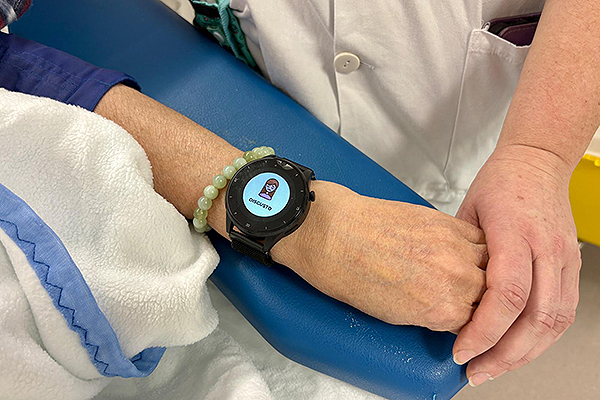
AllPrevent is built around two key elements provided by Intelligent Data S.L.: wearable devices and the AllPrevent technology platform. Smartwatches enable continuous monitoring of vital signs, which is combined with clinical parameters obtained from dialysis machines. All of this is integrated into a chronic patient management platform designed specifically for clinical analysis and longitudinal follow-up.
"Wearables measure patients' vital signs. We combine this with all the parameters from the dialysis machine, along with a chronic patient management platform that we have created within the research group," explains Gómez González in the interview.
Listening to the patient: perceived health and active participation
The system also incorporates a particularly relevant approach: the patient's own subjective perception. Through a visual interface based on icons, users can easily communicate symptoms such as dizziness, cramps, or other common discomforts.
This system reduces communication barriers and encourages greater patient involvement in their own care. "Based on this information, nurses can very subtly explore what is wrong with the patient and be very attentive," emphasizes Gómez González. The result is a closer, more continuous, and more humane relationship between the patient and the healthcare team.
Artificial intelligence to anticipate serious events
All the information collected is analyzed using artificial intelligence, which allows early warnings to be generated based on predictive patterns. According to Rodríguez Puyol, the aim is to detect subtle changes several days in advance:
"We try to predict any changes the patient may experience within approximately three days in order to prevent a serious event, from possible hospitalization to, in extreme cases, death."
This approach represents a paradigm shift in the management of complex chronic patients, moving from reactive care to a preventive and proactive model.
Beyond illness: a comprehensive view of care
One of the most notable aspects of the project is its holistic nature. AllPrevent is not limited to the technical control of dialysis, but incorporates the human factor as an essential part of treatment.
"We are talking about a very serious and tedious disease that affects all levels: social, family, and personal. Patients have to change their diet, their habits, and the way they travel," says Gómez González.
In this context, one of the most significant advances of the project is the sense of security and support that patients are experiencing, knowing that their health status is being continuously monitored.
Preliminary results and future projections
Although the study is still in the data collection phase and preliminary results are not expected until May, there are already signs of a correlation between the patient's subjective perception and the subsequent occurrence of clinical events.
"For these mass methods to be valuable, we need a large population and sufficient clinical events. That is what will give us statistical power," explains Rodríguez Puyol.
If the results confirm expectations, AllPrevent could transform daily clinical practice. The researcher himself illustrates this with a clear example: if the system detects a risk pattern, the doctor receives an alert and can contact the patient to assess the situation and apply preventive measures immediately.
During the interview, Redacción Médica raises the possibility of extending the project to other hospitals and even to the National Health System (SNS). This is an ambitious goal which, if proven effective, could significantly improve the quality of life of chronic patients and optimize healthcare resources.
"The treatment of these conditions accounts for around 5% of healthcare spending," Rodríguez Puyol points out. Reducing hospitalizations and complications would not only have a clinical impact, but also an economic one.
From Intelligent Data, AllPrevent is a clear example of how healthcare technology, applied with clinical rigor and a human touch, can contribute to building a more preventive, efficient, and people-centered model of care.